Concrete Driveways in Massillon, OH
Concrete driveways in Massillon, OH built around real vehicle loads, drainage, and Northeast Ohio freeze‑thaw cycles. We plan thickness, reinforcement, joints, and slope so it stays flat, drains correctly, and looks sharp for the long haul.
What to decide before we pour
- Thickness: Match slab depth to use—daily parking, turning tires, and heavier vehicles.
- Base: Compaction and stone depth matter more than most people realize for preventing settling.
- Reinforcement: Fiber, rebar, or mesh—chosen for your layout and crack‑control goals.
- Joints: Cut/tooled joint spacing that guides cracking where it’s least visible.
- Drainage: Slope, downspouts, and tie‑ins so water doesn’t pond or undermine the base.
- Finish: Broom, light texture, or decorative borders for traction and curb appeal.
Our installation approach
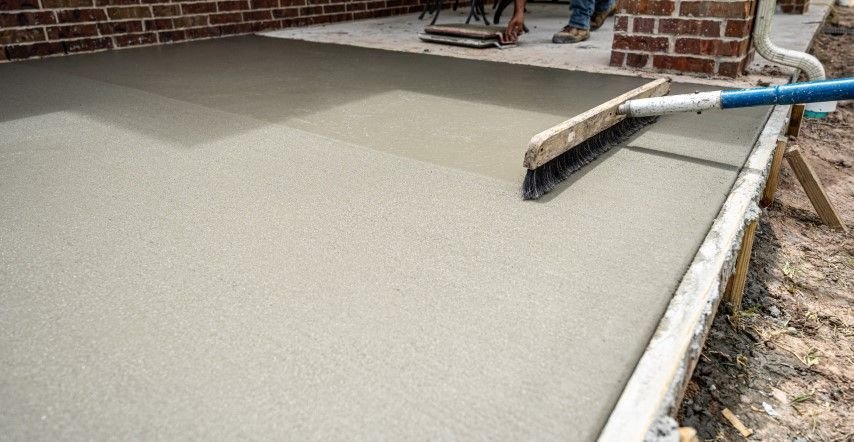
- Site evaluation — Measure, confirm slope/drainage, and mark edges/returns.
- Excavation + base — Remove unsuitable material, place and compact stone base.
- Forms + reinforcement — Set forms, install rebar/fiber plan, and protect edges.
- Pour + finish — Place concrete, finish to spec, cut/tooled joints.
- Curing — Controlled cure to reduce shrinkage cracking and strengthen surface.
How this service performs in Northeast Ohio
Massillon winters are hard on concrete when water sits on the surface or gets trapped under the slab. The best defense is simple: solid base compaction, correct slope, and joints that relieve stress before random cracking shows up.
We also plan around how you actually use the driveway—turning at the garage, trash truck paths, delivery vehicles, and where snow piles. Those details determine where we thicken, reinforce, and place joints.
If you’re replacing an older driveway, we don’t just “pour new.” We look for the reason it failed—downspout discharge, poor grading, or a thin slab—so the new install doesn’t repeat the same problems.
Common problems we prevent
- Low spots that collect water and accelerate surface wear
- Edge break‑off from undersized thickness or weak base at the perimeter
- Random cracking from missing/incorrect joint layout
- Settlement near the garage or street from poor compaction
- Scaling/flaking from standing water and aggressive winter de‑icers
Cost drivers and what moves the number
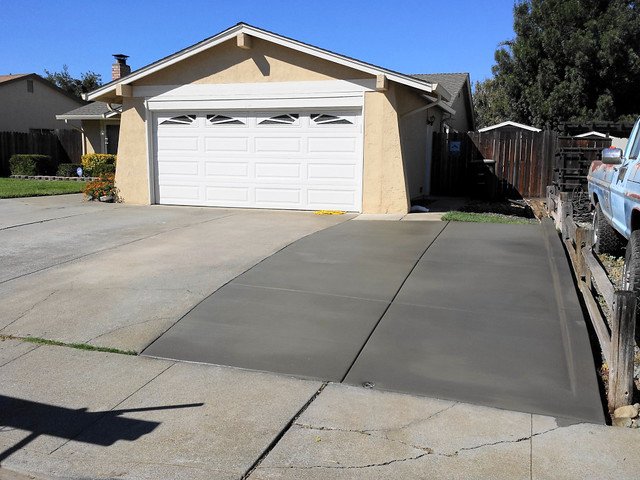
We price with site realities in mind (grade, access, base prep, and finish level). Here’s what most impacts cost:
- Square footage and shape: Curves, tapers, and tight access add labor.
- Thickness and reinforcement: Heavier use areas often need upgrades.
- Base correction: Soft subgrade, poor drainage, or added stone changes scope.
- Removal: Existing slab thickness and disposal requirements affect haul‑away.
- Finishes: Borders, stamping, color, and sealing change the final number.
Tip: a slightly thicker slab and better base typically costs less long‑term than patching recurring cracks from settlement.
Typical timeline
Most driveway projects follow a predictable rhythm: demo and base prep first, then forming and reinforcement, then the pour and finishing. Cure time depends on weather and thickness.
You can usually walk on new concrete within a day or two. Vehicle traffic typically waits longer so the slab gains strength—especially in cooler weather.
We’ll give you a clear schedule window and explain what you can do during cure (and what to avoid) so the surface stays clean and uniform.
| Phase | What happens | Typical time |
|---|---|---|
| Site prep | Layout, excavation, base compaction, forms, reinforcement | Half day – 2 days |
| Pour + finish | Placement, screed, finish, joints/texture | Same day |
| Cure window | Controlled curing to reduce shrinkage cracking | 3–7 days (walk), 7–14+ days (vehicles depending on design) |
FAQs
Do I need to replace my driveway or can it be repaired?
If the slab is mostly sound and the issues are isolated (spalling, a few cracks, minor settling), repair may be viable. Widespread settlement, major heaving, or drainage failure usually points to replacement.
How thick should a concrete driveway be?
Thickness depends on expected loads. Standard passenger vehicle use differs from frequent heavy trucks or RVs. We size the slab and edges based on how you’ll use it.
Will my driveway crack?
Concrete can crack; the goal is controlling where it happens. Proper base prep and correctly spaced joints greatly reduce random cracking.
What finish is best for traction in winter?
A broom finish is a reliable, slip‑resistant choice for Northeast Ohio. Decorative options can still be traction‑friendly with the right texture.
Do you install rebar or wire mesh?
We offer reinforcement options and recommend what fits the layout and performance needs. The right choice depends on thickness, soil conditions, and vehicle loads.
How long before I can drive on it?
Cure time varies with weather, mix, and thickness. We’ll tell you the safe vehicle‑ready date for your specific pour.
Can you fix drainage and water pooling?
Yes. We set slope, plan tie‑ins, and address downspout discharge so water moves away instead of sitting on the slab.
Should I seal my driveway?
Sealing can help with staining and moisture, especially on decorative finishes. We’ll recommend sealing based on your finish and exposure.
What causes scaling or flaking?
Standing water, harsh de‑icers, and finishing/curing issues can contribute. Good drainage and proper curing are key preventers.
Do you handle removal and haul‑away?
Yes. If replacement is the right move, we remove the old slab, manage disposal, and rebuild the base correctly before pouring.
Ready to plan your project?
Get a straightforward recommendation—repair, replace, or upgrade.
Call and we’ll confirm scope, finish options, and the right thickness/reinforcement for your use case.