Concrete Repair vs Replace: How to Choose
Not every cracked slab needs replacement—and not every “repair” is worth the money. In Massillon’s freeze‑thaw conditions, the deciding factor is usually the base and drainage. Use this guide to choose the path that actually holds up.
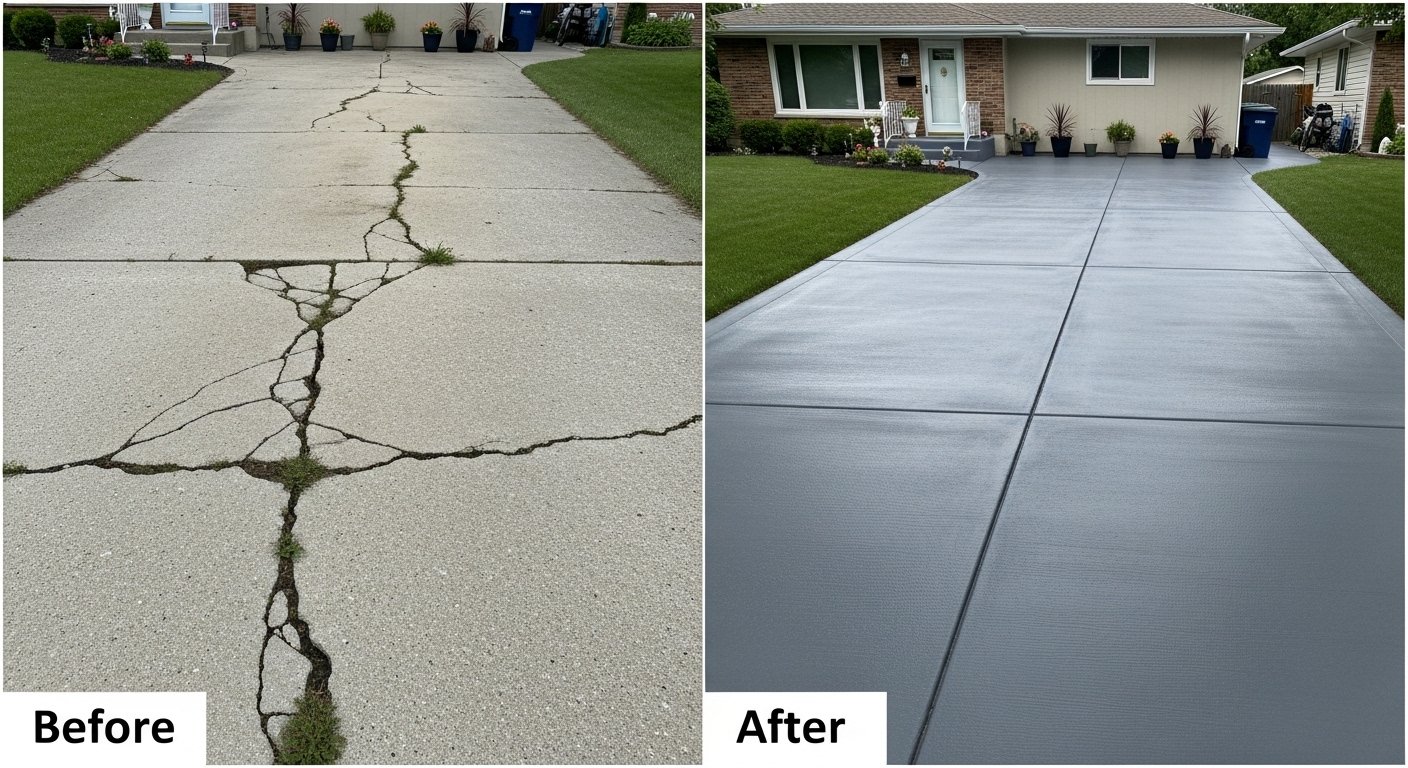
Repair is usually right when…
- Damage is localized (a few cracks, a small spalled area, an isolated edge break)
- The slab is stable with minimal settlement and no widespread heaving
- Drainage is generally good (no chronic ponding or downspout dumping at the slab)
- You want to extend service life while planning a future full upgrade
- Safety issues are limited and can be corrected cleanly
Replacement is usually right when…
- Multiple areas are sinking, heaving, or breaking into uneven panels
- Water is consistently pooling or undermining the base
- The slab is thin/undersized for the loads it sees (driveways, turning areas)
- Prior repairs keep failing because the underlying cause wasn’t corrected
- You want a new layout (wider drive, better approach, new patio geometry)
Fast diagnostic checklist
- Movement: Does the slab rock, sink, or create trip lips? Movement points to base failure.
- Drainage: Is water pooling against the slab or structure? Fixing drainage is part of the solution.
- Depth/strength: Old thin concrete often can’t be “patched” into strength for vehicle loads.
- Goal: Cosmetic improvement vs structural/safety correction vs redesign.
FAQs
Can you repair concrete that’s sinking?
Sometimes, but settlement often indicates base or drainage problems. We’ll recommend the approach that actually addresses the cause.
Is resurfacing a good alternative to replacement?
Resurfacing can improve appearance when the slab is stable. It won’t fix settlement or drainage issues.
How do you decide repair vs replace?
We look at slab stability, drainage, base condition, and the extent of damage—then match the solution to your goals and budget.
Will repairs be visible?
Often yes. Some repairs blend better than others; we’ll set expectations before work begins.
Is replacement always more expensive?
Up front, yes. But repeated repairs can cost more over time when the base problem remains.
What if only one section is bad?
Section replacement can be a great middle ground—fix the problem area without rebuilding everything.
How does winter affect the decision?
Freeze‑thaw and de‑icers accelerate problems caused by ponding and weak base support, so drainage becomes a bigger priority.
Can you help me compare options?
Yes. We’ll explain pros/cons and give a straightforward recommendation.